

This blog was co-authored by Dominic Furniss and Julie Avery.

You have seen the box. Sometimes you have filled it in yourself.
Root cause: human error.
Corrective action: retrain operator. Reinforce expectations. Reissue the SOP.
Signed off, closed out, filed. And then, a few months later, something uncomfortably close to it happens again, to a different person, on a different shift, and everybody is mildly surprised.
That is not a failure of diligence. Most investigators we meet are conscientious, under time pressure, and working to a template that rewards closure. It is a failure of where the investigation was pointed. What you look for is what you find, and what you find is what you fix. If the finding is human error, the fix will be aimed at a person, and the conditions that made the error likely will still be sitting there when the next person walks up to them.
Trevor Kletz put it better than anyone. Saying most accidents are due to human error is true in a sense, but not very helpful. It is, he said, “a bit like saying that falls are due to gravity.”
True. Useless.
Human error is a label, not a cause. It is where an investigation starts. Below are the five principles we use to keep going, and what each one changes about the way you work.
01. Context drives behaviour
In 1955, a crash at Le Mans killed more than eighty people: drivers, track staff and spectators. The race carried on. Officials feared a mass exodus would block the roads for the emergency vehicles, so the cars kept running.
Forty-one years later, Martin Brundle walked away from a spectacular high-speed accident without a bruise, jogged across the circuit to find the doctor, and asked to be cleared to restart in the spare car.
When we show that footage to a room of investigators and ask what changed between those two moments, the answers arrive fast. Barriers. Track layout. A separate pit lane. The halo. Tyres. Crash data. Pit protocols. Medical cover at the circuit. Stopping the race when something goes badly wrong.
Nobody says the drivers got better.
Every answer is about the system around the driver. That is not a motorsport insight. It transfers directly to a tablet press, a road tanker offload, a cleaning changeover or a permit to work.
What it changes: before you describe what someone did, describe the conditions they did it in. What did the system make easy, and what did it make hard, in the moment this happened?
02. Error is normal
This is the principle that gives you the most usable tool, so we will spend the most time on it.
“Human error” collapses four very different things into one word. Separating them is the highest-value move available to most investigators, because each type points at a different kind of fix.
Slips. A person does something other than what they intended. The intention was correct, the execution was not. Reaching for the milk and picking up the orange juice. Selecting the adjacent breaker because it is identical in labelling and layout. An error of commission.
Lapses. A person forgets a step or loses their place. The sign-off missed after an interruption, the valve left unturned, the line not properly cleared. An error of omission.
Mistakes. A person chooses the wrong course of action. Either they apply a familiar rule in a situation where it does not hold, or they reason from first principles and arrive somewhere unhelpful. Here, the intention itself was wrong.
Non-compliances. A person knowingly works around a rule. Shortcuts, workarounds, circumventions. We prefer non-compliance to violation because it is less loaded, and it keeps the conversation open, which is where the useful information is.
Now the part that matters. Slips and lapses are characteristic of skilled behaviour, not carelessness. The person knew what to do and meant to do it. Training them again changes nothing. What changes something is making similar things look different, separating them physically, adding an interlock or an alarm, designing the world so the error is harder to make and easier to catch.
Mistakes are the one category where knowledge and training genuinely help. Non-compliances need a different conversation again, usually about why the agreed way of working is harder than the workaround.
A lapse and a non-compliance are not the same problem. Once the report says human error, that distinction is gone, and so is the chance of a fix that lasts.
What it changes: in your next report, replace “human error” with the specific failure type and what made it likely.

03. How we respond matters
There is the work as it is written, the work as it is imagined by people who do not do it, the work as it is described when someone asks, and the work as it is actually done. Those are four different things, and the gap between them is where most of your risk lives.
If your investigation only asks “did you follow the procedure?”, you never reach how the job really gets done: the adaptations, the pressures, the trade-offs people make to keep things running. Sometimes those gaps are small and harmless. Sometimes they are catastrophic, and known only to one person or one shift.
You cannot close that gap from a KPI dashboard. You have to go and see.
What it changes: on your next walk-round, ask people to show you how the job really gets done, not how it is written.
04. Learning is vital
Picture the incident as an iceberg. Human error sits above the waterline, visible and tempting. Below it, in order: the psychological mechanism, the performance influencing factors, the interactions within the task and what helped or hindered recovery, the latent conditions decided months or years earlier, and the system framework gaps where foreseeable risk was never proactively assessed.
A signage renewal programme cancelled on budget grounds. A hazard analysis programme delayed by two years. Emergency respirators locked away because of a shift change. None of those is the error. All of them are the reason the day went the way it did.
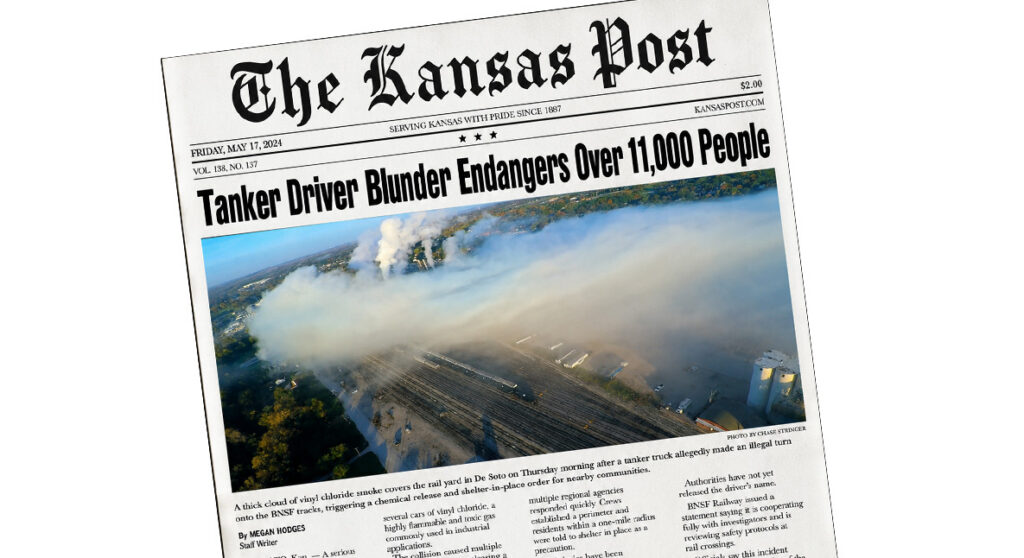
In the session we work a real case all the way down, using the US Chemical Safety Board’s investigation of the 2016 chemical release at a processing facility in Atchison, Kansas. A road tanker connected to the wrong point. A simple slip. Eleven thousand people affected. The distance between those two facts is the whole argument.
You do not need to reach the bottom every time. But the deeper you go, the more levers you have, and the longer the fix lasts.
What it changes: for your next finding, name one latent condition sitting behind the active failure.
05. Blame fixes nothing
We recorded two investigators interviewing the same operator about the same event.
The first conversation is not aggressive. The investigator means well, is under pressure, and asks reasonable-sounding questions. It takes about ninety seconds and produces almost nothing. By the end, both people have agreed it was human error, and neither has learned anything.
The second covers the same ground and surfaces short staffing, a machine that had already tripped, a backlog, a maintenance queue, a guard awkward enough that people routinely bypass it, and three concrete suggestions from the person who does the job.
Same incident. Same operator. Entirely different findings.
We play both in the session and then take the room through exactly what the second investigator does differently. It is not a technique that needs a qualification. It is a handful of questions and a decision about what you are in the room to find out.
What it changes: ask how, not who. And when you hear a thread, follow it before you move on.
Come and sample it
We recently delivered this session for a global pharmaceutical manufacturer, and we are now running it as a free 60-minute taster more widely, twice, to cover time zones.
It is built for investigators, incident reviewers, EHS and operations leaders in pharma and life sciences, and in oil, gas and chemicals, though the principles hold anywhere the consequences of getting it wrong are serious. You will leave with the error typology, a set of better questions for your next walk-round, and a take-away companion you can share with your team.
We are confirming dates now. Tell us roughly when works and which industry you are in, and we will let you know first.
Or bring it to your whole function
The taster sharpens an individual. A private session shifts a function.
That is the real difference. One person coming back from a webinar with better questions is a good thing. A whole investigation community hearing the same reframe on the same day is a different thing entirely, because the language sticks. “That is a lapse, not a non-compliance” starts getting said out loud in review meetings, and the standard moves without anyone having to police it.
A private session is tailored to your sector, your terminology and your own investigation template, so the principles land against the way you already work rather than against our examples. It runs on your timeline, around your shift patterns and your sites, not ours. And because the only people in the room are colleagues, the conversation tends to go somewhere an open webinar cannot.
It works as an upgrade for an established investigation function, or as the opening move if you are introducing one.
One thing to bring with you, whichever route you take: think of a recent investigation, and one thread in it that you let go. What might you have found if you had followed it?
A note on how this was written
This article draws on a webinar delivered by Dominic Furness and Julie Avery of Human Reliability Associates, and on our practice in incident investigation and human factors. It was drafted with the assistance of Claude, an AI assistant made by Anthropic, working from the session material and under the author’s direction. The ideas, examples and professional judgement are ours. The final text has been reviewed, edited and approved by the author.