FREE WEBINAR & DOWNLOAD:  How does your SCTA performance measure up?  Get your SCTA Health Check here.

Our blog

Read the latest insights from our expert team with analysis and views on new research and recent events. Never miss an article by signing up to our newsletter.

Latest insights...

Kegworth Revisited: A Case for Systemic Thinking

On 8 January 1989, British Midland Flight 92 crashed just short of East Midlands Airport, killing 47 people. But the...

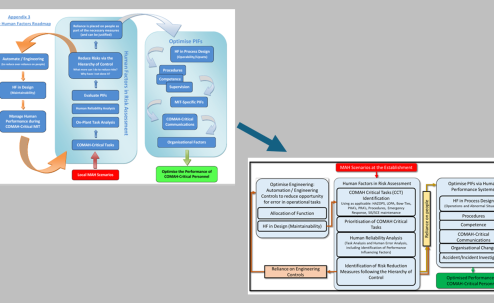
Meeting PABIAC’s Human Factors Objectives (Part 2): A Systematic Approach to HF risk management

Many facilities understand the why behind human factors but struggle with the how. Our latest blog breaks down the systematic...

Getting on the Same Page in Cardiac Surgery: How Shared Mental Models Can Save Lives

A fascinating case study explores how "Shared Mental Models" - a concept proven in aviation and military operations - can...

The 2005 Stockwell Shooting: A lethal stew whose ingredients had been long in the cooking

Using the 2005 Stockwell shooting as a case study, this blog demonstrates how major incidents rarely result from single failures,...

Meeting PABIAC’s Human Factors Objectives (Part 1): An Introduction

PABIAC’s latest strategy marks a turning point for the sector—placing human factors at the heart of safety. But what does...

Bridging the Gap: Aligning SCTA with Engineering Risk Assessments

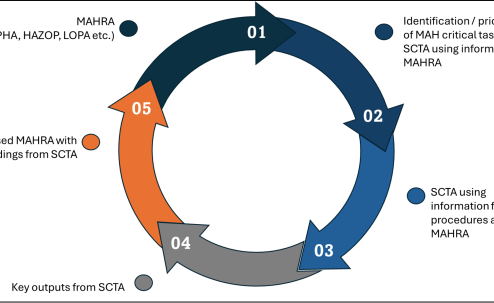
Are your Safety Critical Task Analyses (SCTAs) operating in isolation from your other Major Accident Hazard Risk Assessments? You might...

Predicting and Preventing Human Error: How SHERPA Enhances Medical Device Design

SHERPA (Systematic Human Error Reduction and Prediction Approach) helps medical device organisations anticipate risks long before the device reaches its...

The 7 Deadly Sins of SCTA Implementation: Common pitfalls that mean Human Factors programmes stall

After decades of supporting organisations with Safety Critical Task Analysis (SCTA), we've noticed a pattern: even with great training, implementation...

Human Factors in Turnarounds: Key findings and lessons learned

Turnarounds are planned events where significant sections of a process plant are shut down to enable maintenance or projects to...

The Parable of the Ant: Context Shapes Behaviour

"Context shapes behaviour" - This fundamental principle in human performance is brilliantly illustrated through the Parable of the Ant. This...

The Power of Story in Safety Critical Task Analysis

At first glance, the idea of storytelling in Safety Critical Task Analysis might raise eyebrows. Aren't we dealing with potential...

Using SEIPS to Understand and Improve Patient Safety

Lydea’s latest blog explores how the Systems Engineering Initiative for Patient Safety (SEIPS) framework help move human error beyond individual...

Beyond the Basic HSE PIF list: Reflections on types of Performance Influencing Factors

We often rely on standard HSE checklists for identifying Performance Influencing Factors, but there's so much more to consider....

Introduction To Link Analysis Using SHERPA

Link Analysis is a simple yet powerful tool that visualises workflows, uncovers critical interactions, and enhances design....

HSE Human Factors Delivery Guide for COMAH sites: What’s new?

The HSE released a new Human Factors Delivery Guide for COMAH sites in December 2023. However, there was no briefing...

Revisiting the Swimlane Method: A Healthcare Case Study to Improve Patient Safety

Lydea’s latest blog explores how Swimlane could be applied in the healthcare industry. By mapping out the sequence of events,...

Tackling Procedural Non-Compliance in the Workplace: Insights and Solutions

Standard Operating Procedures (SOP) are essential, but why do operators deviate from them? Our Managing Director, David Embrey, explores how...

Checking, checks, second checks, double checks and independent checks

In this deep dive, we explore the critical role of checking in detecting and correcting errors, especially in safety-critical industries....

Human Factors Regulations in Singapore: A comparison with the UK

In 2017, Singapore introduced the Safety Case Regime under the Workplace Safety and Health (Major Hazards Installations) Regulations, marking a...

Human Performance Guidance for Pharmaceutical Manufacturing: A Regulatory Innovation?

In the pharmaceutical sector, human error isn’t just a “mistake”—it can affect patient safety, production and quality....

Human Factors for Biological Containment Labs

Biological containment labs handle some of the most dangerous pathogens, yet human error remains a critical risk factor in their...

Download our FREE Software Brochure

Archive

Search