What is human factors software and how does it work?
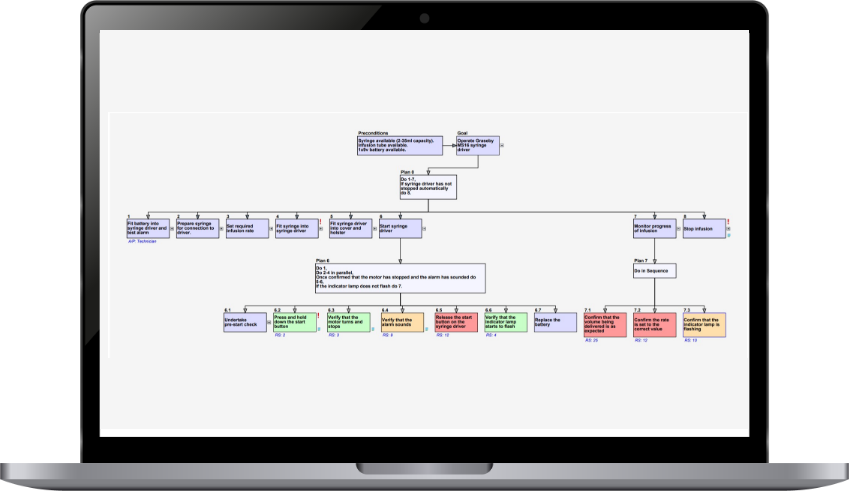
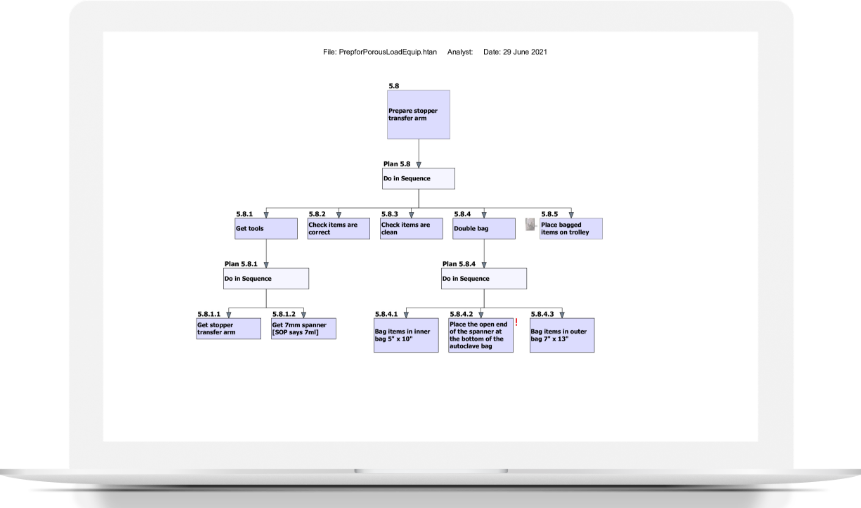
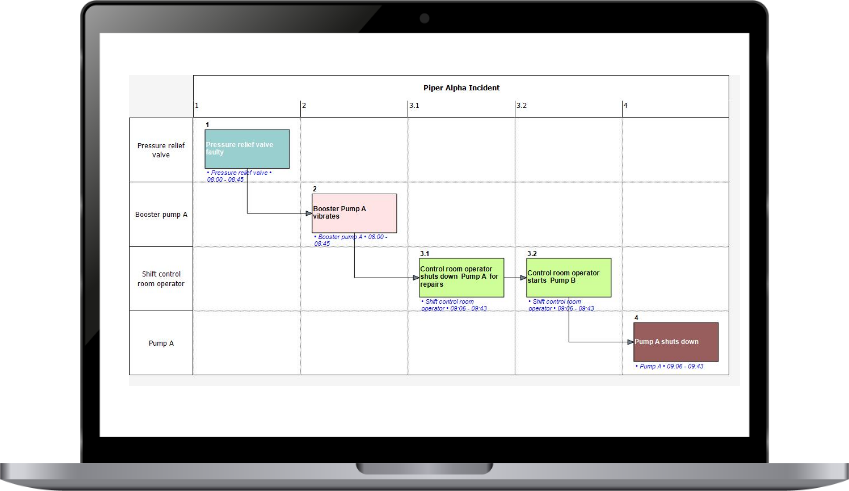
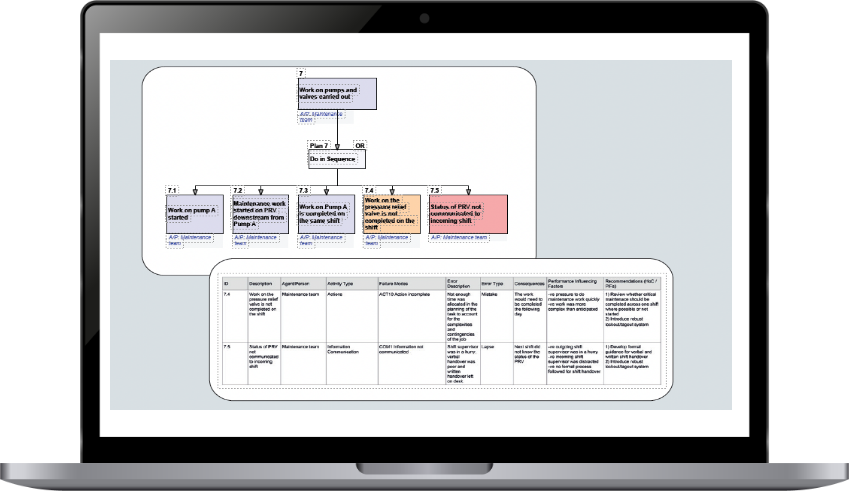
Human factors software provides a structured digital environment for conducting systematic human factors risk assessments. Rather than relying on spreadsheets or paper-based methods, human factors software guides analysts through proven techniques — task analysis, human error identification, and performance influencing factor (PIF) assessment — and produces auditable, consistent outputs. SHERPA is HRA’s own human factors software platform, developed to make systematic Safety Critical Task Analysis accessible and efficient for practitioners across a range of high-hazard industries. It ensures that assessments follow a rigorous methodology and that findings can be communicated clearly to safety teams, regulators, and management.
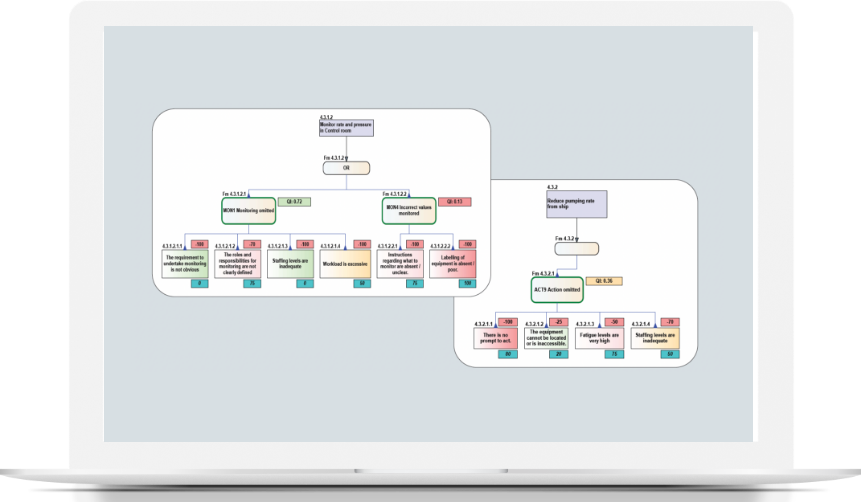
SHERPA software is used to conduct structured human factors risk assessments, with a particular focus on Safety Critical Task Analysis (SCTA). Practitioners use SHERPA to break down safety-critical tasks into their component steps, identify the human errors that could occur at each step, assess their consequences and likelihood, evaluate the performance influencing factors that affect reliability, and generate prioritised recommendations. SHERPA is used by human factors professionals, process safety engineers, and operational risk teams in high-hazard industries including chemicals, pharmaceuticals, oil and gas, power generation, and healthcare.
SHERPA helps reduce human error by making the systematic analysis of critical tasks manageable, consistent, and auditable. It guides analysts through a structured process of identifying where errors could occur, why they are likely, and what can be done to prevent them. By producing a clear, evidenced picture of human error risk across an organisation’s critical tasks, SHERPA enables safety and operational teams to prioritise their risk reduction efforts and track improvements over time. The result is a shift from reactive error management to proactive risk prevention — the hallmark of mature human factors practice in high-hazard industries.
Does SHERPA combine task analysis and risk assessment in a single platform?
Human Reliability’s consultants specialise in systematic human factors risk assessment, with Safety Critical Task Analysis (SCTA) at the core of our approach. We cover the full range of human factors topic areas recognised by the HSE and major industry bodies: Managing Human Performance, Human Factors in Process Design, Critical Communications, Design and Management of Procedures, Competence Management Systems, and Managing Organisational Factors — including their practical implementation and management within client organisations. Control room and alarm management studies are a particular area of growth, reflecting increasing industry demand. Our consultants work at the intersection of research-grade rigour and real-world practicality, applying theory to genuine operational problems in a systematic and thorough manner.
Human error reduction consulting improves safety and performance by moving organisations from reactive responses to proactive prevention. Rather than waiting for incidents to occur, human error reduction consulting identifies the conditions that make errors likely — whether in task design, procedure quality, work environment, or organisational pressures — and introduces controls before those errors materialise. The result is not only a reduction in serious incidents but often measurable improvements in efficiency and confidence among the workforce. One of our pharmaceutical clients achieved a 43% reduction in human error following our consultancy work, generating significant operational value over the following years.
What does SHERPA include for human error analysis and human factors risk analysis?
Yes — identifying and reducing the risk of human error is at the heart of what we do. We use structured methodologies including Safety Critical Task Analysis (SCTA) to systematically review critical tasks, identify the ways in which human errors could occur, assess the consequences and likelihood of those errors, and recommend practical controls. This evidence-based approach gives organisations a clear, defensible picture of their human factors risk profile, along with a prioritised action plan to address the most significant vulnerabilities.
Can the software help with task risk assessment and risk ranking?
Yes. HRA provides human factors input across all three of these areas. Our incident investigation work looks beyond immediate causes to identify the underlying human and organisational factors that contributed to an event — following the principle that understanding why incidents happen is far more valuable than focusing on who was involved. We conduct human factors audits that assess how well an organisation’s systems, processes, and culture support safe human performance, and we carry out human factors risk assessments that proactively identify where error potential exists before an incident occurs.
Yes. Managing Organisational Change is one of the six human factors topic areas recognised by the HSE, and it is an area where organisations frequently underestimate the human factors implications. Our consultants can support change programmes — whether restructuring, headcount changes, shift pattern modifications, or the introduction of new technology — by assessing how proposed changes affect workload, competence requirements, communications, and human error potential. Getting this right early in the design process is far less costly than discovering problems once a new system or structure is already in place.
Human Reliability Associates was founded in 1982, making us one of the longest-established human factors consulting firms in the world. Our founder, Professor David Embrey, was involved in developing human reliability assessment methods now applied globally — including laying the intellectual foundations on which SCTA and other systematic human factors methods have been built, work that grew directly from his involvement in the aftermath of landmark industrial accidents including Three Mile Island and Bhopal. What distinguishes HRA from other human factors consulting firms is not just our history but our approach: rigorous, research-grounded methodology applied to real operational problems, and a principled commitment to systematic practice over generic behavioural safety interventions. We also offer something few consultancies can: a fully integrated service across consultancy, software, and accredited training, meaning organisations can receive expert human factors consultancy support, adopt SHERPA software for in-house analysis, and build internal competence — all from a single, specialist team.
Our human factors consultants bring together academic depth and hands-on industry experience across a range of high-hazard sectors. The team includes specialists with backgrounds in ergonomics, cognitive psychology, process safety, and sociotechnical systems. Professor David Embrey continues to publish and present at leading international conferences, maintaining HRA’s position at the forefront of the discipline. Our consultants regularly present at HAZARDS — the UK’s leading process safety conference — and participate in industry panels and working groups. As a CIEHF Registered Consultancy, HRA is formally recognised for meeting the standards of the Chartered Institute of Ergonomics and Human Factors, providing further assurance of the quality and experience of our team.
HRA’s human factors consultants work primarily in high-hazard industries where the consequences of human error are most severe. Our core sectors include the process industries (chemicals, oil, gas, and petrochemicals), pharmaceuticals and biotechnology, power generation, healthcare, defence, and food and beverage manufacturing. We have extensive experience supporting organisations regulated under COMAH and the UK offshore safety regulations, and have worked with organisations operating under equivalent international frameworks. Our systematic, methodology-driven approach means we can bring genuine value across sectors, adapting proven human factors methods to the specific hazards, tasks, and regulatory contexts of each industry.
Is SHERPA cloud-based, and how is it deployed?
HRA’s approach is built around systematic, evidence-based human factors methods rather than generic safety programmes or behavioural interventions. Safety Critical Task Analysis (SCTA) is central to our consultancy work — a structured technique that identifies which tasks carry significant human error potential, analyses how errors could occur at each step, examines the performance influencing factors (PIFs) that affect reliability, and produces prioritised recommendations for risk reduction. We also use Hierarchical Task Analysis (HTA) and a task-based approach to incident investigation, depending on the nature of the engagement. All of our consultancy work is grounded in the intellectual tradition of human reliability assessment that HRA helped to establish, and applies that body of knowledge to the practical realities of our clients’ operations.
What return on investment can we expect from SHERPA, and how is it priced?
Yes. Our human factors consultancy work has tangible, demonstrable impact, even if the most important outcome — accidents that did not happen — is inherently difficult to quantify. We regularly support organisations that have received action notices from the HSE, helping them fulfil their legal human factors obligations, de-escalate regulatory interventions, and return to a position of confident compliance. In one representative engagement, a focused human factors assessment of proof test procedures — a project of around six to seven days in total — revealed systemic vulnerabilities affecting hundreds of safety-critical instruments across a large industrial site. That single assessment triggered a substantial, site-wide programme of safety improvements. Collectively, our project work has generated significant insight into operational risk and produced meaningful, lasting improvements to safety — improvements whose full value lies precisely in the incidents they have prevented.
How quickly can our team get up and running with SHERPA?
Yes. Our human factors consultancy work has tangible, demonstrable impact, even if the most important outcome — accidents that did not happen — is inherently difficult to quantify. We regularly support organisations that have received action notices from the HSE, helping them fulfil their legal human factors obligations, de-escalate regulatory interventions, and return to a position of confident compliance. In one representative engagement, a focused human factors assessment of proof test procedures — a project of around six to seven days in total — revealed systemic vulnerabilities affecting hundreds of safety-critical instruments across a large industrial site. That single assessment triggered a substantial, site-wide programme of safety improvements. Collectively, our project work has generated significant insight into operational risk and produced meaningful, lasting improvements to safety — improvements whose full value lies precisely in the incidents they have prevented.
Yes. Our human factors consultancy work has tangible, demonstrable impact, even if the most important outcome — accidents that did not happen — is inherently difficult to quantify. We regularly support organisations that have received action notices from the HSE, helping them fulfil their legal human factors obligations, de-escalate regulatory interventions, and return to a position of confident compliance. In one representative engagement, a focused human factors assessment of proof test procedures — a project of around six to seven days in total — revealed systemic vulnerabilities affecting hundreds of safety-critical instruments across a large industrial site. That single assessment triggered a substantial, site-wide programme of safety improvements. Collectively, our project work has generated significant insight into operational risk and produced meaningful, lasting improvements to safety — improvements whose full value lies precisely in the incidents they have prevented.
Yes. Our human factors consultancy work has tangible, demonstrable impact, even if the most important outcome — accidents that did not happen — is inherently difficult to quantify. We regularly support organisations that have received action notices from the HSE, helping them fulfil their legal human factors obligations, de-escalate regulatory interventions, and return to a position of confident compliance. In one representative engagement, a focused human factors assessment of proof test procedures — a project of around six to seven days in total — revealed systemic vulnerabilities affecting hundreds of safety-critical instruments across a large industrial site. That single assessment triggered a substantial, site-wide programme of safety improvements. Collectively, our project work has generated significant insight into operational risk and produced meaningful, lasting improvements to safety — improvements whose full value lies precisely in the incidents they have prevented.
Yes. Our human factors consultancy work has tangible, demonstrable impact, even if the most important outcome — accidents that did not happen — is inherently difficult to quantify. We regularly support organisations that have received action notices from the HSE, helping them fulfil their legal human factors obligations, de-escalate regulatory interventions, and return to a position of confident compliance. In one representative engagement, a focused human factors assessment of proof test procedures — a project of around six to seven days in total — revealed systemic vulnerabilities affecting hundreds of safety-critical instruments across a large industrial site. That single assessment triggered a substantial, site-wide programme of safety improvements. Collectively, our project work has generated significant insight into operational risk and produced meaningful, lasting improvements to safety — improvements whose full value lies precisely in the incidents they have prevented.